Storage begins with the object and its customs status.
Artworks, antiques and heritage objects may require short-term holding, long-term collection storage, bonded arrangements, empty-crate storage or scheduled access before the next movement.
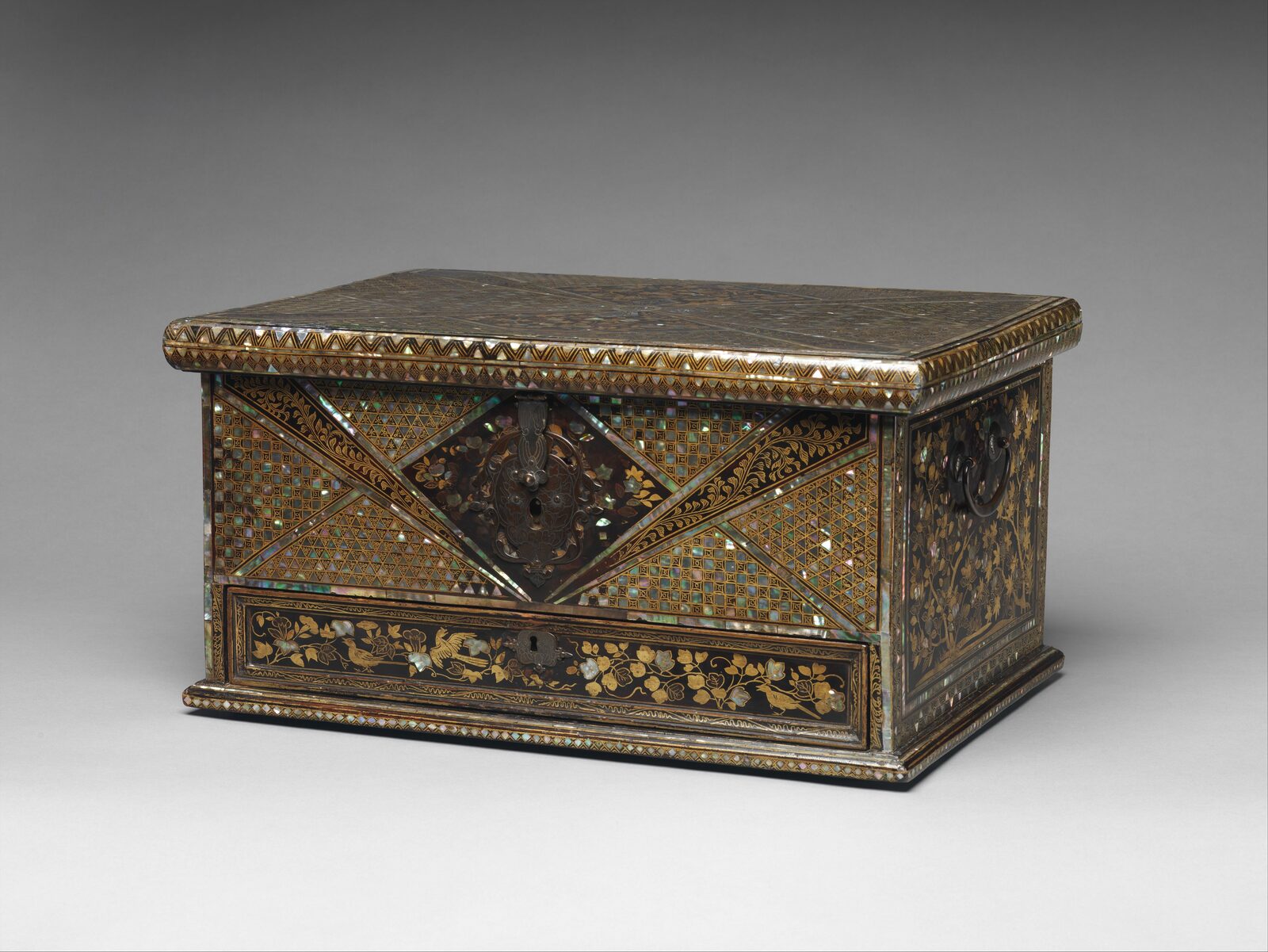
Chest with a Single Drawer, late 16th–early 17th century
01
Storage Assessment
The appropriate storage arrangement is determined by the object, its packing format, customs position, intended duration and access requirements.
Object type and materials
Quantity and dimensions
Packed or unpacked format
Crate dimensions
Customs status
Intended storage period
Access frequency
Environmental sensitivity
Security requirements
Final destination
02
Storage Environment
The environment should support the stability and protection required by the stored objects.
Temperature stability
Relative-humidity stability
Light exposure
Dust protection
Air quality
Pest-management controls
Separation from unsuitable materials
Monitoring arrangements
Emergency procedures
03
Storage in Packing or Crates
Some objects may remain protected in transit packing or custom crates, while others may require unpacked storage.
Duration
Crate design
Internal packing materials
Ventilation
Environmental sensitivity
Access frequency
Inspection requirements
Future transport plans
Inventory Control
Every stored unit remains identifiable.
Object Record
Object reference, artist or maker, title or description, dimensions and condition-documentation reference.
Packing Record
Packing format, crate number, internal components and the recorded storage position.
Customs Record
Customs status, intake date, applicable deadlines and authorised movement instructions.
Movement Record
Access history, retrieval, return, release approval and final handover details.
Access & Viewing
Planned retrieval and controlled return.
Access may be arranged for inspection, photography, condition reporting, valuation, conservation review or client viewing, including safe retrieval, opening, repacking and inventory updates.
Empty-Crate Storage
Packing systems remain traceable.
Exhibition crates and reusable packing systems are identified and stored according to their dimensions, internal components, return date, delivery sequence and repacking schedule.
04
Intake
Before storage begins, the receiving process establishes the identity, quantity, condition and assigned location of each packed unit.
Appointment confirmation
Vehicle arrival coordination
Crate and package count
Identification checks
Exterior packaging review
Customs-document verification
Inventory registration
Assigned storage location
05
Release
Release is planned against the authorised instruction and the next stage of the movement.
Release approval
Customs-status confirmation
Object or crate retrieval
Visual packaging checks
Loading sequence
Transport scheduling
Document handover
Inventory update
Delivery notification
Storage Management
Controlled from intake through final release.
NOOR L'Atelier manages storage intake, inventory coordination, approved access, customs status, movement records and final release as part of the complete fine-art logistics operation.
Request a Storage Review
Provide the storage requirements.
Share the object type, quantity, packing format, customs status, intended storage period and required access frequency.